



The difference between kiss cut and die cut stickers seems small until you actually start peeling, packing, or handing them out. One format gives you a finished custom shape. The other keeps that shape on a larger backing, which can make peeling and handling easier. Neither is automatically better. The right choice depends on what the sticker needs to do before and after it is applied.
For giveaways and branded inserts, die cut stickers often make sense because the shape is visible immediately. For packaging, labels, or several designs grouped together, kiss cutting can be more practical.
Die Cut Stickers vs Kiss Cut Stickers: What Changes?
Both formats can follow the outline of custom artwork. The difference is how deeply the material is cut.
How does a full contour cut work?
With die cut stickers, the blade cuts through the printed material and the release liner underneath it.
That means the backing follows the same outer shape as the sticker. A round logo becomes a round piece. A mascot can follow the character outline. A badge, icon, or product silhouette can be handed out as a finished shape before anyone removes the backing.
How does kiss cutting work?
Kiss cutting stops at the sticker layer while leaving the larger release liner intact. The peelable sticker can still have a completely custom contour. What changes is the backing around it.
That extra liner is useful when someone needs more room to grip the sticker, when several designs need to stay together, or when small edges need support during storage and handling. It does not improve the printed detail itself. Its main advantage is convenience.
Feature | Die cut | Kiss cut |
Cut depth | Through sticker and backing | Through sticker layer only |
Backing | Follows the final shape | Larger liner stays around the design |
Peeling | Less backing to hold | Usually easier to grip |
Packaging | Works well as a loose insert | Convenient for repeated application |
Sticker sheets | Less common | Well suited to grouped designs |
Presentation | Looks finished before peeling | Artwork remains on a larger backing |
Best uses | Giveaways, inserts, logo shapes | Labels, sets, sheets, packaging |
When Die Cut Stickers Make More Sense?

The strongest reason to choose a full contour is presentation.
Giveaways need to look finished
Think about what happens at a trade show or inside an ecommerce package. The customer may hold the sticker for several seconds before deciding where to put it.
In that situation, the backing is part of the first impression. A logo or mascot with a clean custom outline usually looks more intentional than the same design sitting inside a square backing.
Brands comparing die-cut sticker should judge the final shape at the actual size they plan to order, not only while looking at enlarged artwork on a monitor.
Keep the shape clean
Complexity is not always an advantage. A narrow spike, tiny gap, or deep notch may look harmless on screen but become awkward once the sticker is only two or three inches wide.
This matters especially with die cut stickers because the outer edge is exposed before application. If removing a tiny detail does not change the way the logo is recognized, simplifying it can make the finished piece easier to handle and cleaner to look at.
When Kiss Cut Better Fit?
Kiss cutting makes more sense when the backing has a practical purpose.
Packaging teams often need easier peeling
Someone applying a handful of labels can take their time. Someone applying hundreds during fulfillment cannot. A larger liner gives the person applying the sticker more room to hold the backing and separate it from the adhesive.
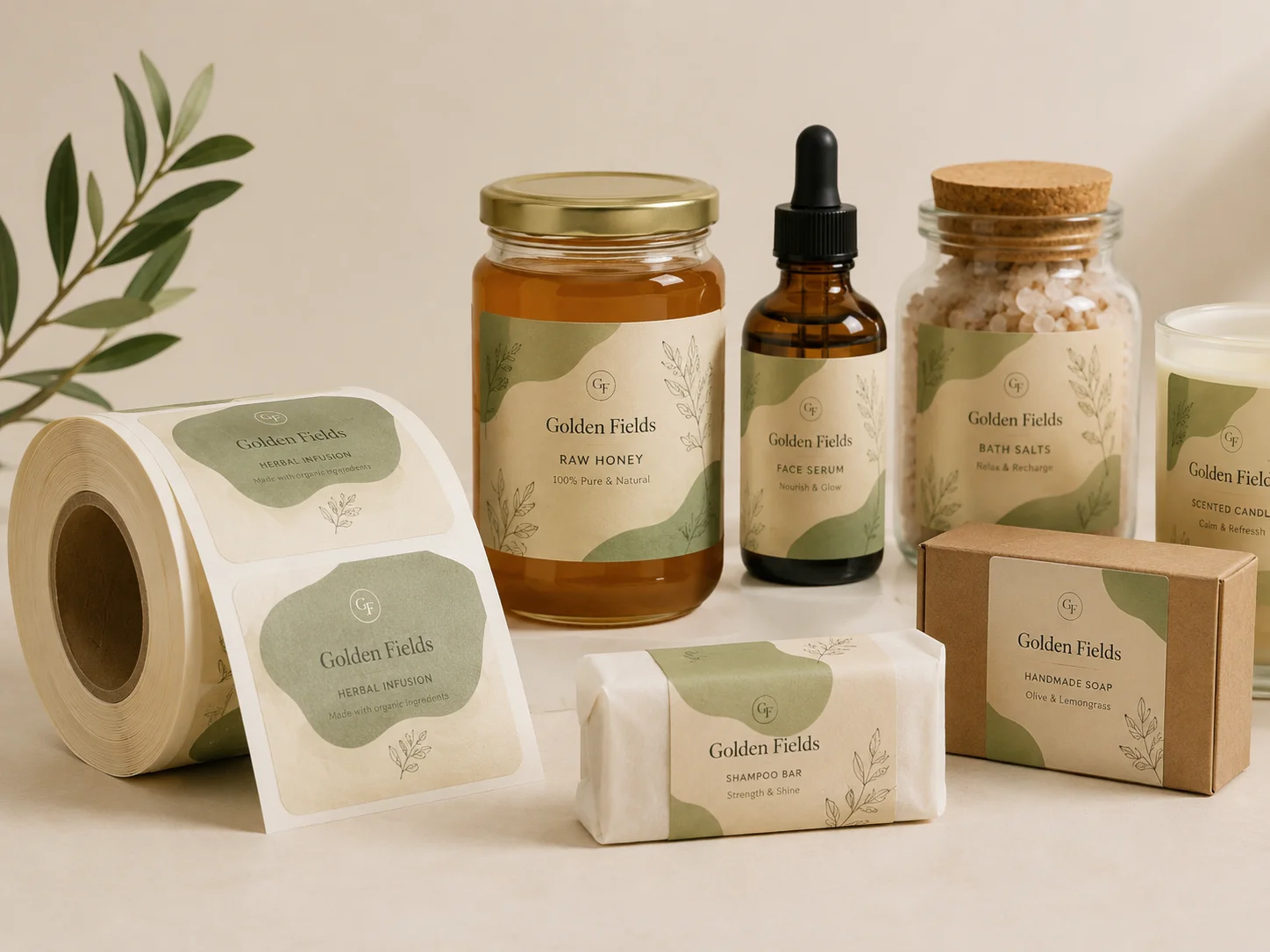
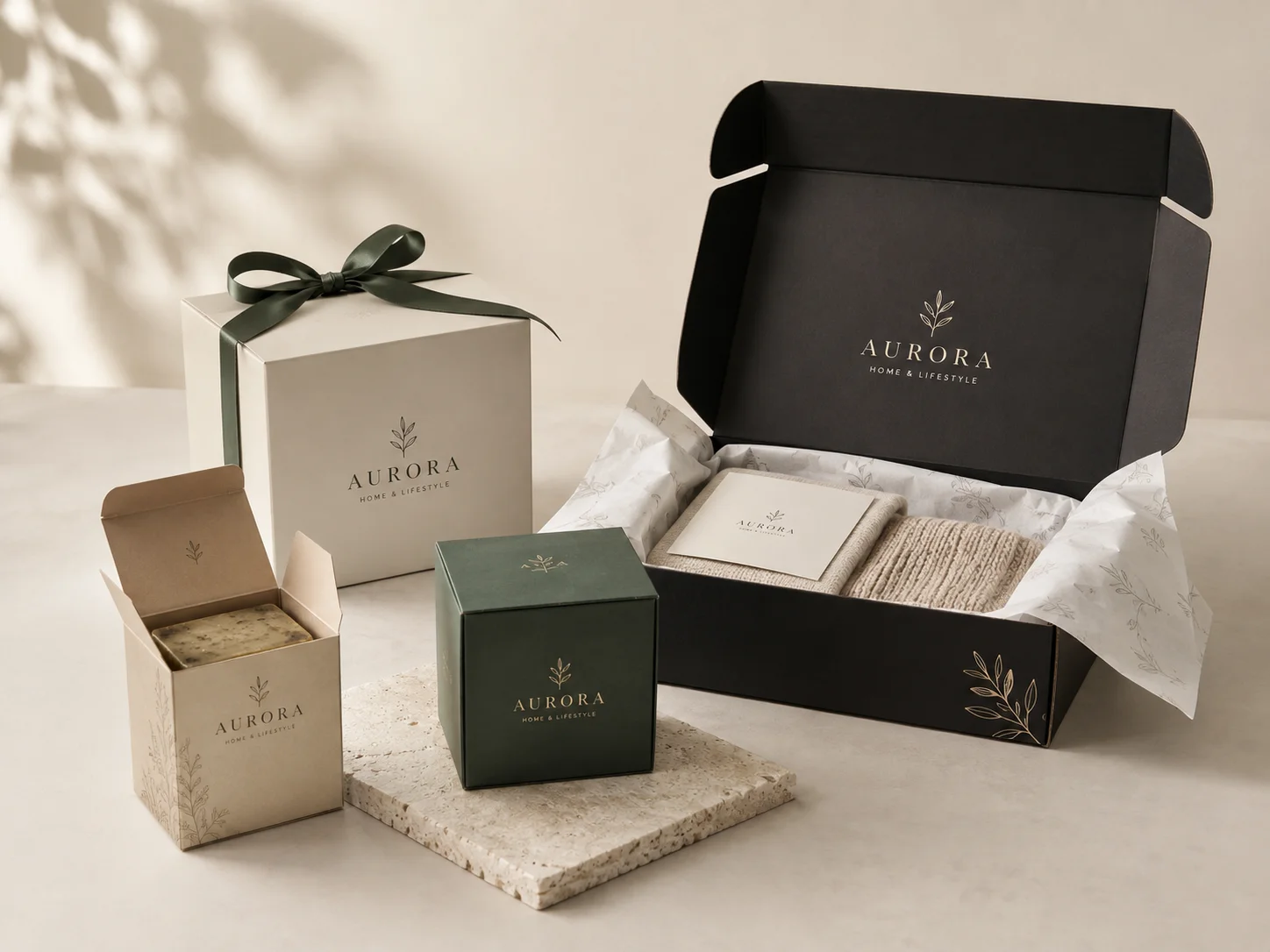
That can be useful for boxes, jars, envelopes, mailers, and tissue closures. Before choosing a cut purely because of appearance, compare the job with packaging and box seals. A packaging sticker should fit the workflow as well as the artwork.
Sticker sheets are easier to keep organized
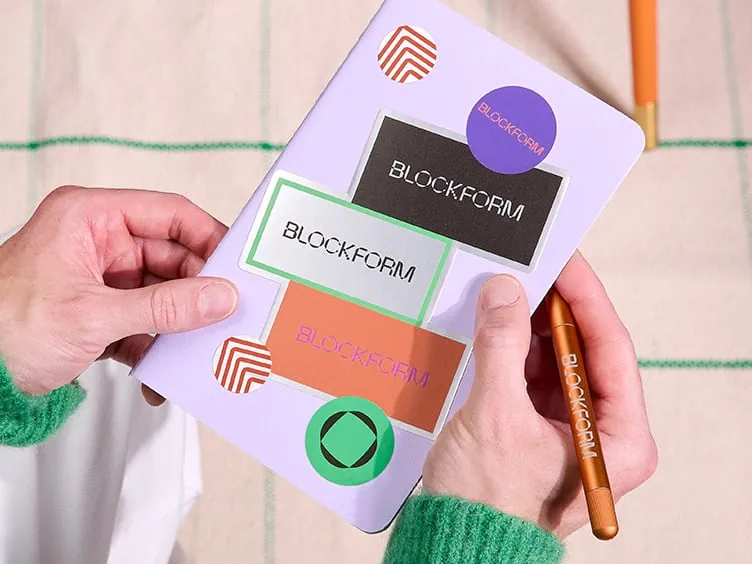
Sticker sheets are another clear use case. Several graphics can stay on one backing while each piece still has its own custom contour. Nothing gets mixed up in the package, and the user can peel one design without separating an entire set.
That makes kiss cut stickers practical for planner sets, sample packs, promotional collections, onboarding kits, and grouped custom labels.
Material Matters More Than the Cut for Durability
A cut tells you how the sticker is delivered. It does not tell you how long it will last once applied.
Start with the surface
Paper may work perfectly well on dry indoor packaging. Vinyl stickers are often a better candidate for bottles, equipment, cases, and some outdoor applications when the material is specifically rated for those conditions.
The surface matters too. A sticker that holds well on glass may behave differently on textured plastic, coated cardboard, or metal. When adhesion is important, testing the actual surface before a large order is worth the effort.
For items such as laptops, bottles, and giveaway products, laptop, bottle and giveaway stickers are a more useful place to compare options than choosing the cut first.
Finish changes the look and handling
Gloss gives the surface more shine and can make colors feel richer. Matte cuts glare and often creates a softer appearance. A laminate may add protection against rubbing, moisture, or repeated handling, depending on the product specification. Those choices generally have more influence on real-world performance than whether the backing is kiss cut or fully trimmed.
Prepare the Artwork Around the Final Size
A clean production file makes the cutting process much easier.
Avoid overcomplicated cut paths
The contour should be closed, deliberate, and easy to follow. Keep QR codes, small types, and important logo elements away from the cutting edge. If the design includes tiny spikes or tight spaces, check whether those details still make sense at final size.
For custom sticker printing, the artwork should be judged as a physical object, not just as a digital illustration. A four-inch design can tolerate details that may feel crowded when reduced to two inches.
Check image quality before approval
Adobe identifies 300 pixels per inch as the industry standard for high-quality prints viewed up close. That makes 300 PPI a useful benchmark for raster artwork at final size. Logos, typography, and contour paths are generally better supplied as vector artwork because they can scale without losing edge clarity.
“Design is the silent ambassador of your brand.” Paul Rand
That idea applies particularly well here. The customer notices shape, spacing, material, and finish before studying the technical production choices behind them.
Which One Should You Choose: Kiss Cut or Die Cut Stickers?

The easiest way to decide is to stop comparing the cut names and look at how the sticker will actually be used.
Choose die cut stickers for individual presentation
They are a strong fit when:
You plan to hand out individual stickers at events.
The logo or artwork relies on a distinctive outer shape.
The sticker will be placed inside a shipment as a branded extra.
The piece should look complete before anyone peels it.
If you plan to order die cut stickers, check the contour on a proof at its final physical size.
Choose kiss cut for easier handling
It is often a better fit when:
Several designs need to remain together.
Employees will apply labels repeatedly.
The artwork includes delicate edges that benefit from backing support.
Extra liner space makes peeling more convenient.
Sticker sheets are one of the most natural examples because the backing keeps the entire set organized.
Let the material answer durability questions
If the real concern is water, sunlight, refrigeration, scuffing, or frequent handling, start by choosing the right stock, adhesive, and finish. The cut itself cannot make unsuitable material perform better. That distinction prevents a common ordering mistake.
Cost Comparision: Kiss Cut vs Die Cut Stickers?
There is no dependable rule that one cutting method is always cheaper.
Size and quantity matter
A small run of large pieces can price differently from a larger run of compact stickers. Quantity changes production efficiency, while final size affects how many pieces can fit within the printing and finishing layout.
Material and finish matter too
Paper, vinyl, clear materials, specialty stocks, matte finishes, gloss finishes, and laminated products can all have different production costs. A simple design on standard material cannot be compared fairly with a weather-resistant sticker using a more complex specification.
Shape complexity and delivery format can change the quote
A simple circle and an intricate contour do not require the same finishing approach. The way the order is supplied also matters. Individual pieces, sticker sheets, and roll formats may involve different production steps. When comparing prices, keep size, material, finish, quantity, and format the same. Only then are you making a useful comparison.
Common Mistakes to Avoid Before Ordering
Most sticker problems are easier to prevent before production than after the order arrives.
Choosing based on appearance alone
A custom outline may look impressive, but it is not necessarily the most practical format for every packaging or labeling job. Think about who will peel the sticker and how often they will do it. That answer can matter more than the backing shape.
Assuming kiss cut means better detail
The larger liner can support narrow edges and make peeling easier. It does not make the actual print sharper. Print quality depends on artwork resolution, production method, material, and the size of the finished design.
Making the contour more complicated than necessary
The cutting path should support the artwork. If every tiny visual detail becomes a turn in the contour, the finished sticker can look busy and become more difficult to handle.
Conclusion
There is no universal winner between kiss cut and die cut stickers. The better format is the one that fits how the sticker will be handled. Therefore, choose die cut stickers when the standalone shape is an important part of the presentation. While choosing a kiss cut when a larger backing makes peeling, organization, or repeated application easier.
Then look at the rest of the specification. Confirm the final size, material, adhesive, finish, quantity, and surface before approving production.
If you are ready to buy custom stickers, use BizCard to compare the available formats, match the sticker to its actual use, and place an order with a clearer idea of what will work best for your brand.