





A wholesaler has just come to you asking for information about a new product. The sales person brings his/her photo, size, available finishes and wholesale information. It would not be necessary to send the entire 12-page company brochure. The buyer is interested in one item, not the entire business.
Different documents are needed for different situations. It can be the first time a company meets a new client and thus, they must cover a lot of ground: explaining the company, its services, and samples of its work. It would not be possible to cover everything in one page.
That's why businesses opt for both formats. The sell sheet is a presentation that is given a focused presentation of one product or one service. There is more space in a brochure to provide a broader introduction and supporting information. This difference impacts not just the design. Paper selection, printing needs, distribution and future revision also are worth considering.
This is easier to make when it's planned with the person receiving it in mind, not the amount of information that the business wants to publish.
When a Sell Sheet Is the Better Choice?
A sell sheet works best if there is a clear subject on the sales discussion. The recipient may be looking for a specific product, doing a supplier comparison or checking an offer before sending it to a purchasing manager
That should be made easier in the document. Rather than having a history of the company and listing services that are not relevant to the offering, it focuses on the facts that will aid in evaluating the offering.
Product Introductions That Need Immediate Attention
Imagine that a furniture company launches its new office chair. It would be helpful for a sales document to display a clear picture of the chair and its specifications, such as dimensions, upholstery options, adjustment features, and material details.
Those details can be looked through by a retailer without browsing through an entire furniture catalogue. The document may include a website or sales contact for the buyer if they require further information.
That's where a product sell sheet really comes in handy. The information on the page will support this sales discussion and the product will stay the focus.
Wholesale Meetings and Distributor Enquiries
Wholesale buyers will typically not require the same information as retail buyers. They might wish to know about product variations, minimum order quantities, packaging, available finishes and ordering arrangements.
For distributors there will be a separate page for each significant product with something of value to keep with their purchase records. It also helps the sales rep not to send a large collection of material after each meeting that is not relevant to the meeting.
Individual pages are easier to replace in the event of a product experiencing a change in its range – such as when a model is discontinued or specifications change.
Sales Follow-Ups After Presentations
Not everyone who is involved in the final decision is required to be at a meeting. A representative may need to explain a product to a department manager who in turn passes on the information to a procurement team.
A summary that is printed provides the next person with a set of objects to check. It needs to be informative enough so that you can read it and understand what the product is without reading the original presentation, and should have enough information in it that you can contact the company for more information.
The same page can also be sent with an email to a prospect that has come to the website after a preliminary meeting.
Where a Brochure Fits Better?

When the business has more than one offering it becomes useful to use a brochure. It provides the reader with space to wander from company introduction to services, product categories and information in between.
Let's take a business floor manufacturer. It may provide services like carpet installation, hardwood floors, tile, and floor restoration. Before making a decision on which to ask about, a potential client might want to know what the various services are.
If all this information were to be put on one page, it would be difficult to find it. A folded brochure can serve as a means to have each service section, with corresponding photographs and easy explanations.
Business brochures are also ideal for businesses that want to showcase their services at exhibitions, welcome prospective clients or have information at their reception desks.
It should be easy to read the way it is set up. A reader should have to read through irrelevant sections to get the information they are looking for if the business doesn't provide it in the information section.
What Belongs on Each Printed Document?
The biggest design error is attempting to place all the available details into the same marketing piece. Attractive design can appear cluttered when it's placed on a page. Too much information is a common issue
The following should be the priority in a sales document:
The name of the product or service which represents the offering.
A picture of the item or a drawing, that clearly illustrates what is being sold.
A brief description of the offering.
The primary features of the item being sold that are important to the end user.
Details of its size, components, storage, etc.
Not all of these are essential for every business. This can involve explaining to a service provider what should be done, or the manufacturer requiring technical specifications and/or model numbers.
A brochure has a different purpose. It may contain background information about the company, several service descriptions, photographs of projects, locations, and approved customer testimonials.
A good separation is between the product specification sheet and a sales document. Compliance and technical drawings, along with detailed operating instructions, could be placed in another datasheet. There should be no coercing them into a promotional layout just because there is space to fit it in.
Paper and Finishing Choices for Sales Materials

The printed document is circulated, deposited, exchanged among individuals and sometimes displayed. The paper should be appropriate for that purpose.
Card Stock for a More Substantial Handout
This is a stronger card, between 14PT and 18PT compared to standard text paper. It might be a good option for a sales presentation where an attendee will need to retain the paper or share it with a second decision maker.
But not always is thickness the most powerful stock for each campaign. The practical needs of a business that is sending out a large batch at a public event may differ from the needs of a manufacturer making a small batch for a select group of distributors.
Card Stock for a More Substantial Handout
The finish alters the appearance of photographs, colors and text.
Product photography can be given more impact by using gloss, especially if the photograph is an essential component of the presentation. Matte is less reflective and may be easier to read under some lighting circumstances.
Another factor to consider is uncoated paper, if the recipient will be required to write on the paper. The use of the item should be the determining factor and not the sample photo.
Using Spot UV Selectively
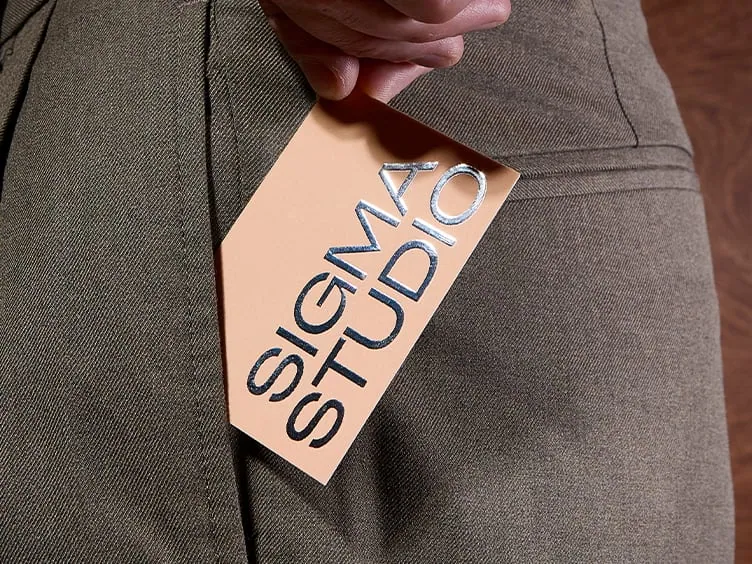
Spot UV: glaze on a portion of the surface and have the rest of the surface treated in another way. It could be employed in a logo or a specific picture of a product being used by a business.
The effect is most beneficial when there is a definite need to highlight a specific aspect of the design. If used on a large number of elements, it can eliminate the contrast that makes the finish apparent.
These are available for custom sheet printing. A sample pack is also provided on its product page where the feel of the paper is important for the final presentation.
Printing Cost, Quantity, and Future Updates
Printing estimates should always be compared to the actual production needs. The price is influenced by the weight of the paper, the number of prints, coatings and finishing. Folding may also add other production steps to a flat sheet.
To get a fair comparison ask a quote for the same amount of and similar specifications. If not, the discrepancy in the two might be more about paper and finishes than the format.
It's not just the quality that matters, quantity matters too. The requirement for a product launch could be for a business to have sufficient copies for its sales representatives, distributors, and events. Printing significantly over the number of campaign materials required can result in boxes of obsolete materials.
Another factor is future revisions. Product prices, model numbers and options can be subject to change. Leave the original art and verify that there is no change in the information provided before making a repeat order.
Using Both Formats Without Repeating the Same Information
A brochure can be utilized in conjunction with individual product sheets, without making the sales process unnecessarily complicated.
A manufacturer of industrial equipment, for instance, could send a new prospect a catalogue that explains the organization, a list of equipment types and services offered. If the prospect requests a specific machine, the salesperson can supply him with a separate page with specifications, photos and ordering details.
There are two documents with different roles. The brochure describes the services that the company provides. The individual page contains the information required for assessing one of the products.
Conclusion
It may be best to start with what information a customer needs to make a decision and then build a sell sheet or brochure around that information. Most times, the introduction of the entire company is not required.
Consider to whom, how and what will need to be accurate after printing. Approve the artwork by comparing paper, finishing and quantity.
Explore the different card sizes, materials and finishes available at BizCard and select the features best suited to your sales needs. To decide if you are prepared to order a finished paper, a sample pack is helpful in evaluating the paper.


