









Say a small candle maker signs a ten-week holiday lease in a suburban strip center. Candles are poured and shelves are on order. And the store signage? That gets handled last, by whoever has a free evening.
Good signage for a temporary retail space comes from a short sequence most first-timers skip. Walk the unit, check the landlord’s rules and the city’s, plan each sign around where shoppers stand, size the type for distance, and buy materials built for ten weeks, not ten years.
This season raises the stakes. The National Retail Federation forecasts $1.013 trillion in holiday sales for November and December 2026, 4.2 percent above last year. Much of that gets spent by people strolling past units like this one, and retail signage does a lot of the persuading.
Signage Planning For A Short-Term Lease
Two jobs come first, and neither needs a designer.
Walking The Site
Before anyone touches a design file, go stand in the space. Twice, ideally. A window that looks fine at ten in the morning can catch enough glare by four to swallow a navy headline. Bring a tape measure; leasing-packet floor plans are often a tenant or two out of date.
Then walk in from the parking lot and note where the storefront first shows. Anything blocking that sightline changes where storefront signage can go, and it’s better learned before you pay for business signage printing.
Landlord And City Sign Rules
Shopping centers almost always have tenant design criteria, the document nobody reads until the property manager emails about a banner. Ask for it when you sign. The city layers its own sign code on top.
Oak Park, Illinois, wants a temporary A-frame within 15 feet of the main entrance. Mount Pleasant, South Carolina, requires a permit before a commercial A-frame goes out at all. A ten-minute call to the planning office beats a fine. Make it before approving any retail signage printing.
Sign Placement From Sidewalk To Checkout

Shoppers meet your signs in order. Sidewalk, window, aisles, counter. Retail signs that try to do everything tend to do nothing well, so good retail signage design gives each sign one job along that customer journey.
Sidewalk Signs
Someone walking by with a coffee and a phone gives a sidewalk board about two seconds. Name, offer, arrow. That’s the budget. A double-sided sidewalk A-frame sign catches foot traffic from both directions, and slide-in inserts let the candle maker swap “20% Off Pillars” for “Gift Sets Inside” midweek.
Business signs on the pavement often have to come in at closing, another point for a frame that folds flat. At the lot entrance, small shop signs with a logo and arrow are plenty.
Window Signage
The window has a different job. Passersby want to know who you are, what you sell, and how long you’ll be around. Retail window signage that answers that in big, plain type beats glass wallpapered in product shots.
Leave clear glass at eye level so the candles do some selling. Many landlords ban permanent adhesive outright, and static cling film gets around that.
Wayfinding Inside The Store
Store designers call the first few feet inside the door the decompression zone. People are still adjusting to the light there, and signs mostly get ignored. Move the first directional sign a few steps in, then let retail wayfinding signage lead toward new scents and the register. With almost no usable wall, slip-resistant floor graphics can carry the route instead.
Checkout Signage
The counter is the point of purchase, the one spot where shoppers stand still long enough to read. Put retail display signs and shelf talkers at eye level beside featured products, and check every price against its tag. Nothing sours a sale like a mismatch at the register.
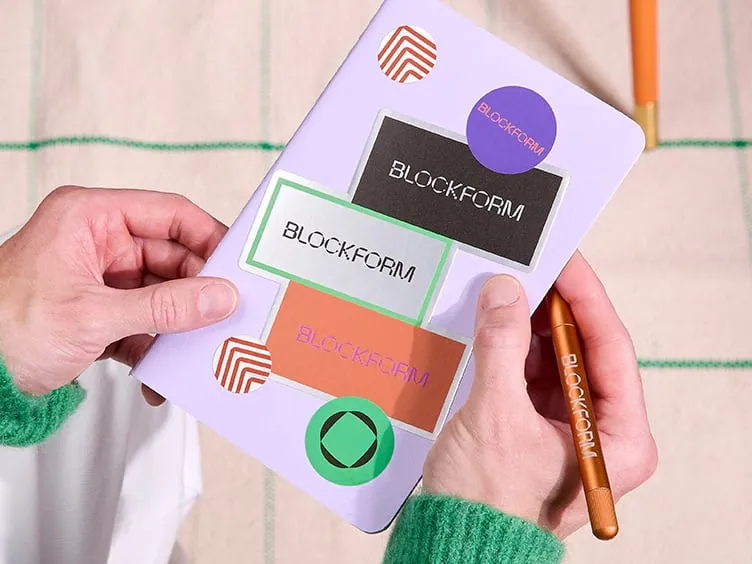
A bundle deal or loyalty QR code by the card reader is retail promotional signage that earns its spot. Order these in the same retail display printing run as the window graphics, because colors drift between batches.
Letter Size And Contrast Guidelines
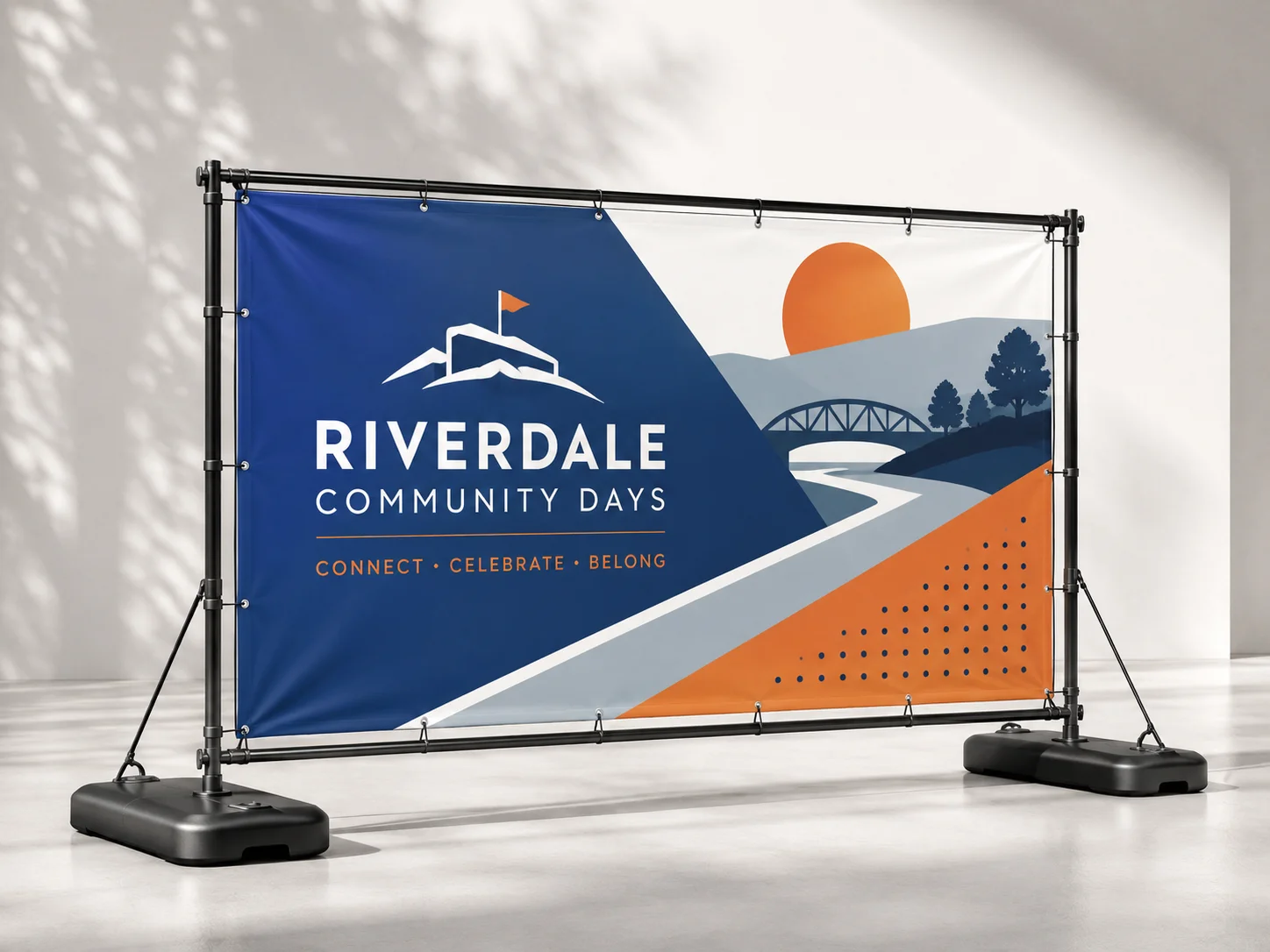
None of it matters if nobody can read the signs. Sign makers use a rough rule of 1 inch of letter height per 10 feet of viewing distance, so a headline read from 40 feet needs letters at least 4 inches tall. Banners have it harder since people read them while moving, which is why event banners need a different design strategy.
Contrast matters as much for store signage. Dark text on a light background is the safe bet. Thin script fonts look lovely on a laptop and turn to mush at twenty feet. Good retail signage design means fewer words than you’d like, under seven in a headline.
The cheapest test costs a few sheets of paper. Print a full-size mockup, tape it to the glass, and read it from the curb. If it fails there, it fails on vinyl too. Thomas J. Watson Jr., who ran IBM for 15 years, had a line for this. “Good design is good business.”
Materials Matched To Lease Length
Picking signage material is like renting a car. It should last the trip, not outlive you. Outdoor-grade durability in a ten-week indoor shop is wasted money, while cheap paper in a sunny window may fade before Christmas.
Runs Under Two Weeks
Weekend markets, flash sales, and grand opening events call for cheap and fast. Business signs that change with every offer only need a few days, so foam board and paper posters work. On glass, static window clings peel off without a mark.
Seasonal Runs Up To Three Months
A 60- to 90-day holiday lease needs sturdier stock, such as 4mm corrugated plastic, PVC board, or indoor vinyl banners. Custom signage printing on these costs more per piece. Still, that beats a mid-December reprint.
Reusable Kits For Repeat Pop-Ups
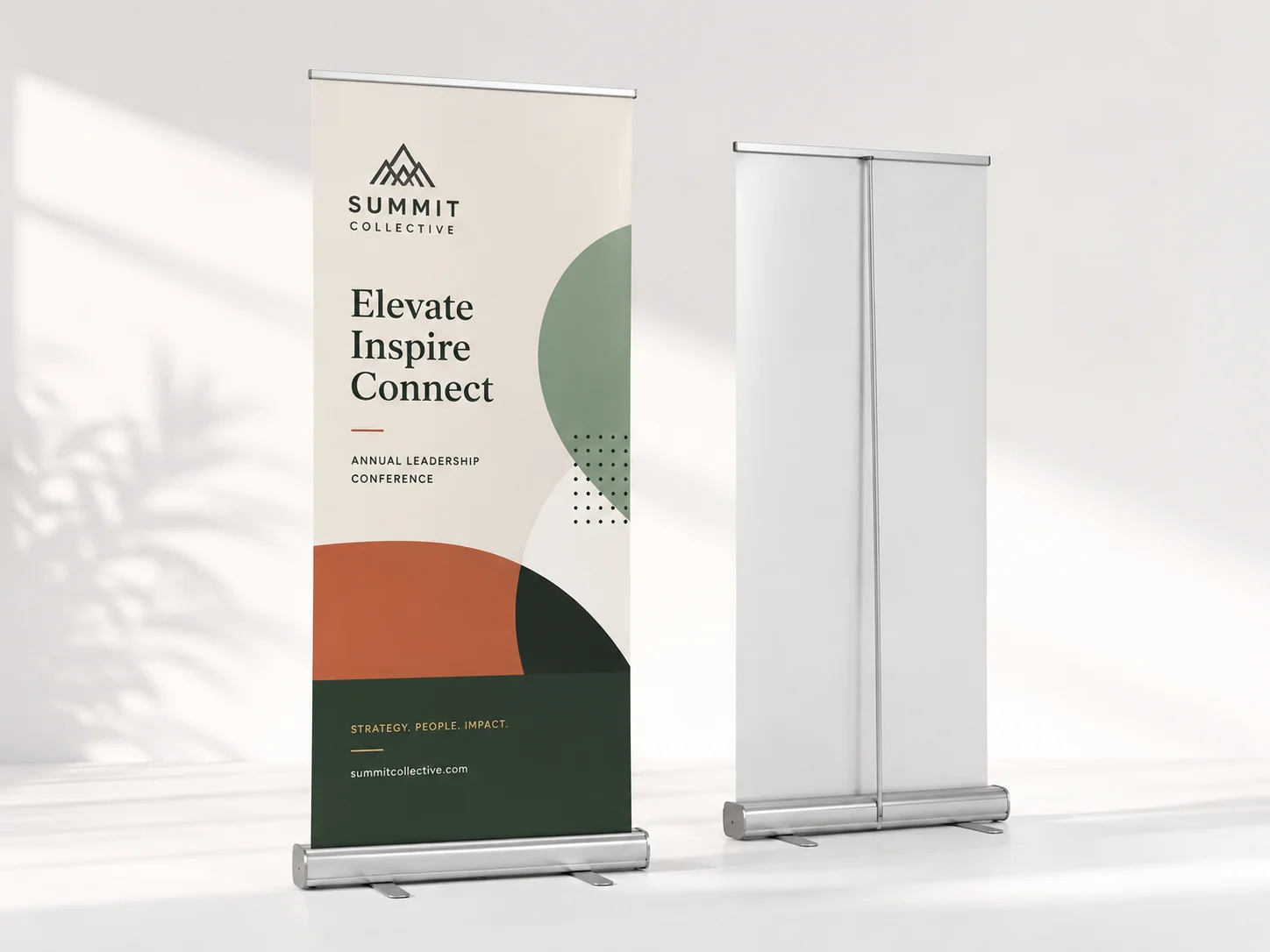
If the candle maker pops up again next spring, or in other cities, split the kit. The logo goes on hardware that travels, like a retractable banner stand, and dates go on cheap inserts. For portable sign printing, favor pieces that roll up or fold flat, since they ship better.
Safe And Accessible Sign Placement
Picture the unit the Saturday before Christmas. Strollers, bags, a line at the register. That’s when a badly hung sign becomes a hazard. Wall-mounted objects 27 to 80 inches off the floor shouldn’t stick out more than 4 inches.
Those numbers suit temporary pieces too. Hang overhead retail wayfinding signage above 80 inches, and keep A-frames out of the main aisle with 36 inches clear.
Six-Week Signage Production Timeline
Rush fees are rarely the printer’s fault. Usually the artwork got approved Thursday for a Saturday opening. Planning retail signage backward from opening day avoids that problem entirely.
Six weeks out, gather tenant criteria, permits, and your site measurements.
For four weeks, lock the copy and list every sign by zone and size.
Proofs deserve a full-size look, not a glance at a phone.
Two weeks out, place the retail display printing order.
Install two days early, then walk each approach route by day and after dark.
One business signage printing order keeps the reds matching the reds, and brands with pop-ups in several cities can standardize print across every location. After the first weekend, check QR scans by zone and pull any retail promotional signage nobody responds to.
Bottom Lines
A short lease gives you one shot at the storefront. Settle the site, rules, and zones early, and storefront signage works from the first morning.
BizCard handles custom signage printing for everything covered here, from sidewalk A-frames and window clings to floor graphics and counter cards, and nothing prints until you approve the proof. Sketch your zones this week, send the artwork, and book retail signage printing before the holiday queue fills.


