
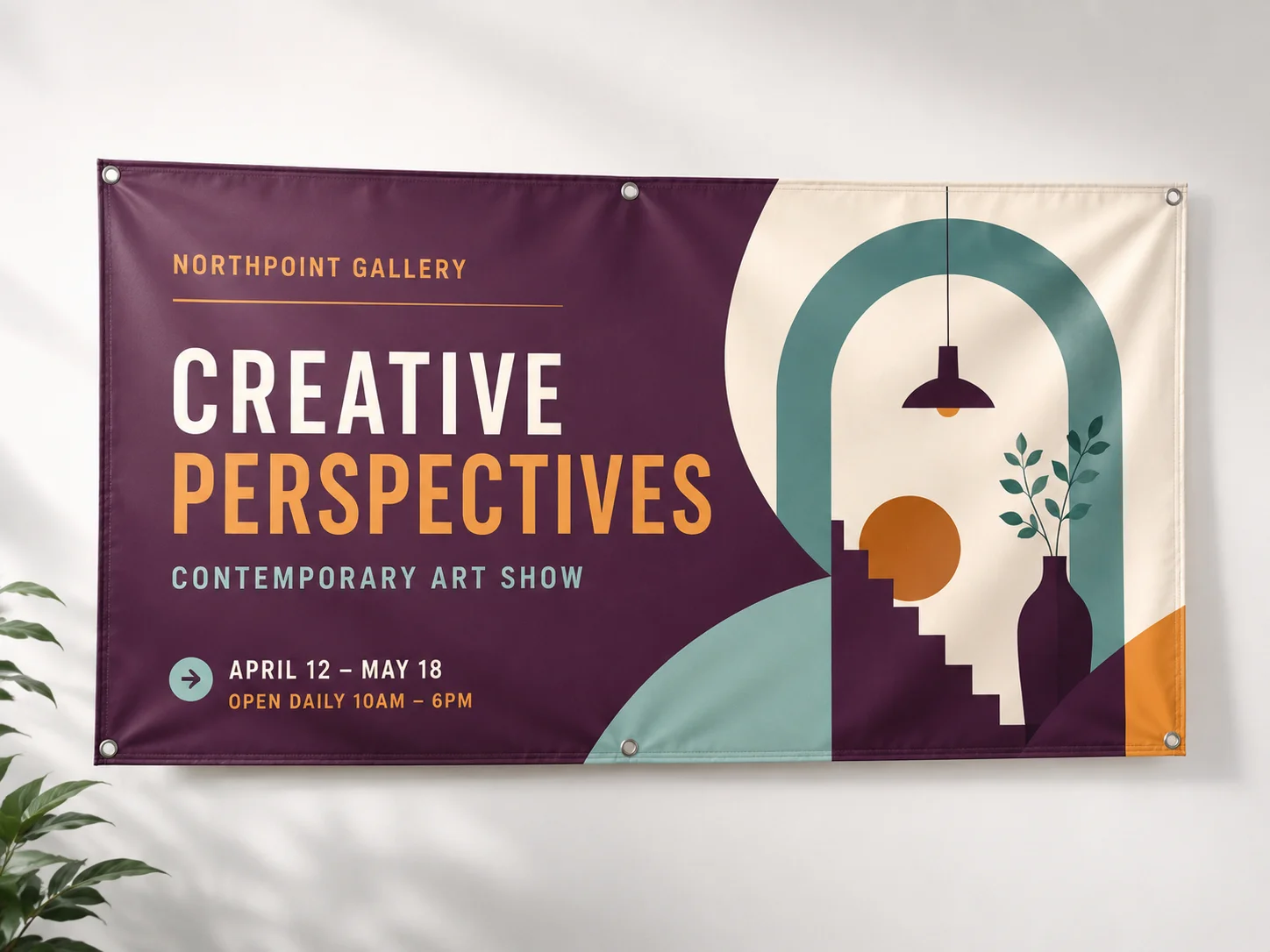
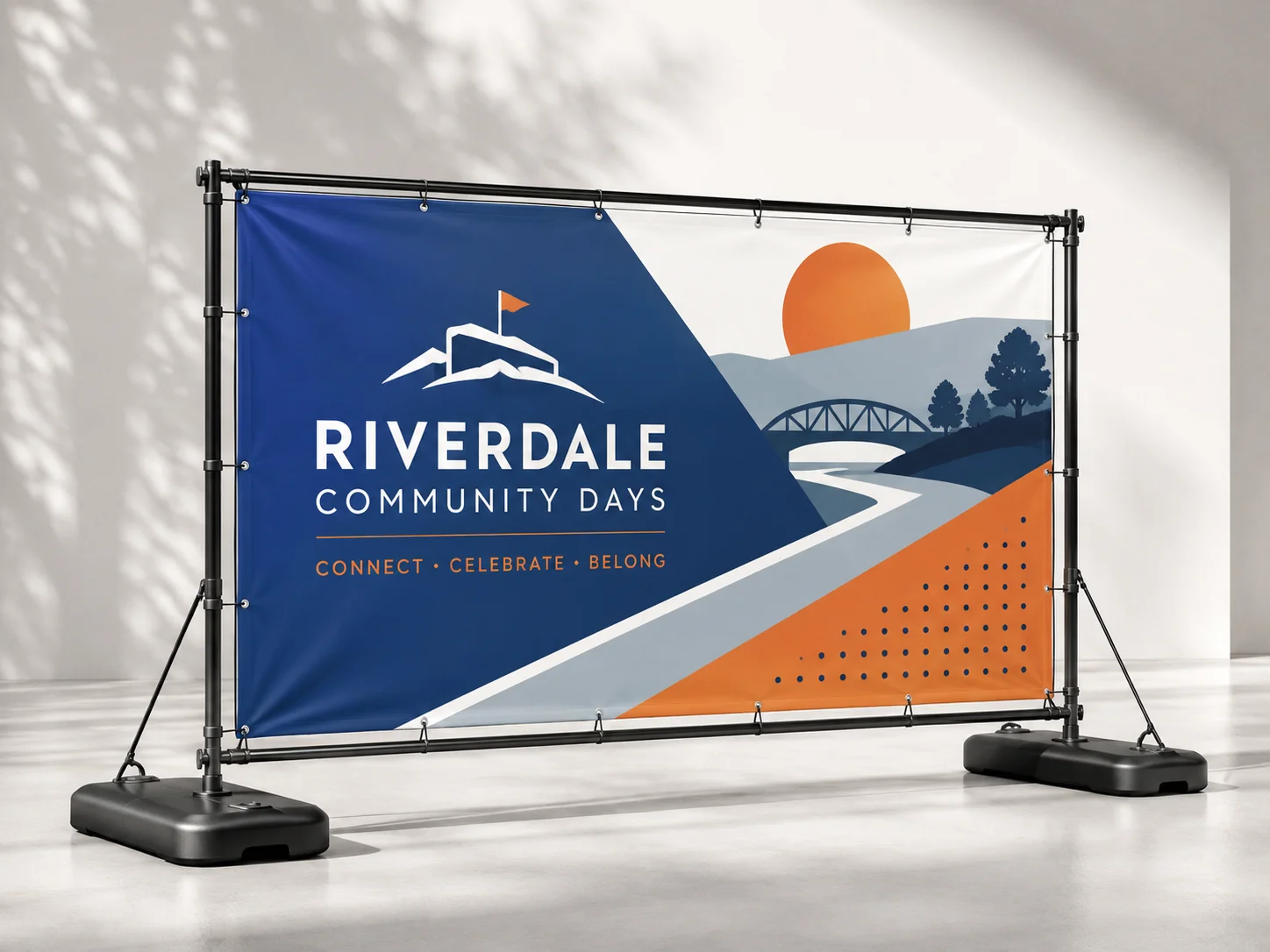

A three-foot sign and a nine-foot backdrop start from the same kind of file. Only one usually disappoints. The printer is rarely at fault. The trouble starts earlier, in the file, the artwork, and the way the piece hangs.
Why Fabric Banners Stay Sharp Without A 300 DPI File
How Far Back People Stand Changes The Rules
The 300 DPI habit comes from the print you hold in your hand. Nobody reads a booth wall from eight inches away. Sharpness rests on two things. Resolution, and viewing distance. As the viewer steps back, the file can carry fewer pixels per inch and still look clean.
The Right DPI For Each Viewing Distance
Good display banner printing sets the target by distance, not habit.
3 to 6 feet, such as a table display or a shop shelf, use 150 DPI
6 to 15 feet, such as a booth wall or a stage backdrop, use 125 DPI
15 feet or more, such as a hall drop or an atrium graphic, use 100 DPI
Our premium fabric banners page asks for that same range. CMYK artwork, 100 to 150 DPI at full size, a quarter inch of bleed. Large format banners built this way stay sharp and easy to work with. Push a 10-foot file to 300 DPI and it can pass 20 GB, which often fails on export.
Once you know the target, one small sum gets you there.
The Resolution Math Behind Large Format Banner Printing

Working Out The Pixels Your File Needs
Take the finished width in inches. Multiply it by your target DPI. That is the pixel width the file needs.
Try it on a size we print often. Most 8-foot fabric banners measure 96 by 36 inches. At 125 DPI, that file needs about 12,000 by 4,500 pixels. A stock photo 4,000 pixels wide falls two thirds short. Blowing it up adds no detail.
Two Habits That Stop Soft Prints
Build the file at a smaller scale and raise the DPI to match. A quarter-size file at 500 DPI prints the same as full size at 125 DPI. The rule also covers large-format posters and window graphics.
Next, check effective resolution, not the number the file was saved at. Software only shows true DPI once an image has been scaled. A 300 DPI photo stretched 400 percent is now a 75 DPI photo. Run this check before buying a stock image for custom banner printing and fabric banners stop letting you down.
Resolution is only half the story. The cloth sets a limit of its own.
How Dye Sublimation Changes Detail On Fabric?
Why Does The Ink Go Into The Cloth?
Fabric banner printing does not sit ink on a surface. Heat turns the dye into a gas. The gas moves into the polyester fiber. Color sets inside the material, so nothing rests on top to crack or peel.
Why Does The Weave Set A Detail Floor?
A 9oz knitted polyester has a visible weave. The dye also spreads a little as it enters each fiber. Past roughly 150 DPI, the cloth is the limit, not your artwork. Fabric banners reward designers who work with that floor.
Keep line strokes at 1.5 points or heavier at finished size
Avoid small type dropped out of a dark field, because fill-in closes letter shapes
Skip fine texture, thin serifs, and hairline rules
Give logos room instead of shrinking them into a corner
Matte cloth holds less contrast than the gloss on indoor vinyl banners, which is why it photographs with no hot spots. The navy on black turns to mud on camera. Custom banners for photo walls need tones you can tell apart across a room.
Banner Design Choices That Protect Fine Detail

Keep Logos And Type As Vector Art
Vector is your strongest protection. Logos, headlines, icons, and rules drawn as vectors carry no resolution. They print at full quality at 4 feet or 40.
"The details are not the details. They make the design." - Charles Eames
Save raster files for photos. Fabric banners look best with one strong image, not five small ones fighting for space, and the same holds for any fabric backdrop.
Set The File Up Correctly
Work in CMYK from the start so screen blues and neon greens hold on press
Use a rich black near 60C 40M 40Y 100K rather than 100K on its own
Add a quarter inch of bleed on every edge
Keep readable copy half an inch inside the trim, further near hems or pole pockets
Outline or embed every font so nothing swaps out on you
Size Your Text For The Room
Event banners face a problem that file prep cannot fix. Your copy has to land while somebody walks past. A simple rule gives one inch of cap height per 10 feet of viewing distance. A line read from 20 feet needs about two inches. Cutting words beats making them bigger, and honest banner printing services say so before the job runs.
How Tension And Handling Keep A Print Crisp?

Finishing That Holds The Cloth Flat
Fabric banners still look soft on a sagging wall, because every ripple scatters light. Finishing is what keeps the surface flat. Sewn hems stop the corners stretching. Pole pockets let gravity pull the piece straight. Grommets suit rope or hooks. Thread comes in black or white, so match it to your artwork.
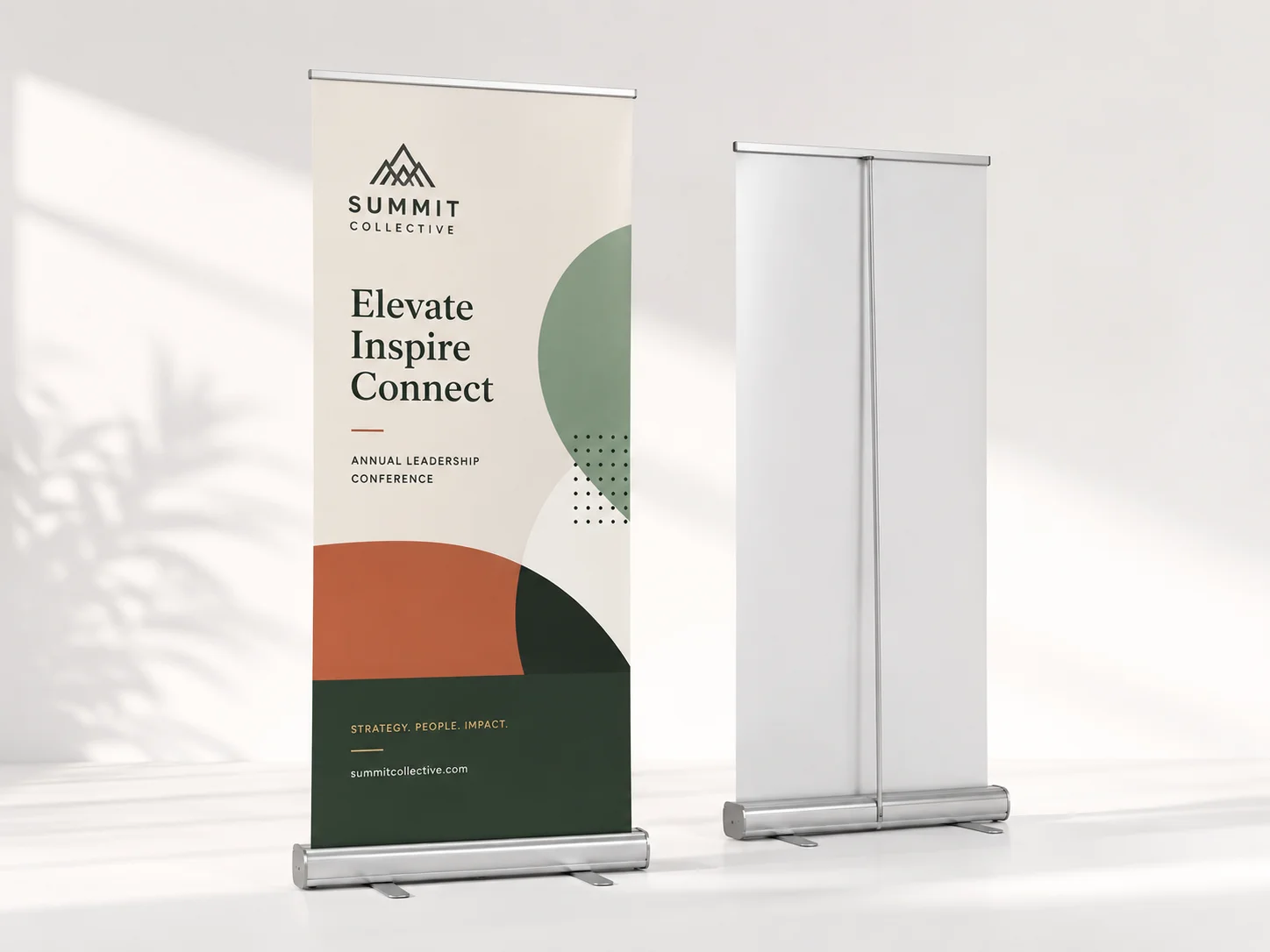
Freestanding setups handle tension their own way. Our retractable banner stands hold steady pull across the full height and go up in under a minute.
Folding, Storing, And Steaming
A custom backdrop folds into a bag instead of a tube, so event banner printing on cloth travels better than vinyl. Fold along the same lines each time. Store the piece flat. Steam it from the back on low heat, and never iron the printed face. Creased, loosely hung fabric banners read soft however clean the artwork was.
Your Pre-Press Checklist Before You Order
Work through this list and most reprint problems go away.
Confirm finished size, then work out the pixels needed at 125 DPI
Check effective resolution on every photo after scaling
Convert to CMYK and set a rich black
Swap any raster logo for vector art
Check stroke weights and cap heights against viewing distance
Add bleed, pull copy inside the safe margin, outline the fonts
Export one flat PDF at finished size
Read the digital proof closely, your last look before press
Sign off your banner design here and the wall will match the rest of the stand. Our trade show planning checklist covers how the pieces fit together.
To Sum Up
Sharpness stops being lucky once you write the process down. Set the DPI from viewing distance. Do the pixel math before buying artwork. Keep type and logos vector. Hang the piece under tension. Banner printing then becomes a spec your whole team can follow.
Put it to work on your next job. Order fabric banners, a custom backdrop, or a full trade show and events kit together, printed in the USA in one to four business days, with a digital proof on every order and free reprints if anything misses.


