



In most smaller businesses, the morning mail is usually organized before it is read. The mail is typically organized into two piles. One that looks like it has important information, and the other containing everything else. While there is no official documentation of how the mail is organized, the organization occurs based upon what the mail looks like.
The quality of the company letterhead will be one of the first things looked at to decide if your letter (i.e., contract, invoice, thank-you) should be placed in the highest pile.
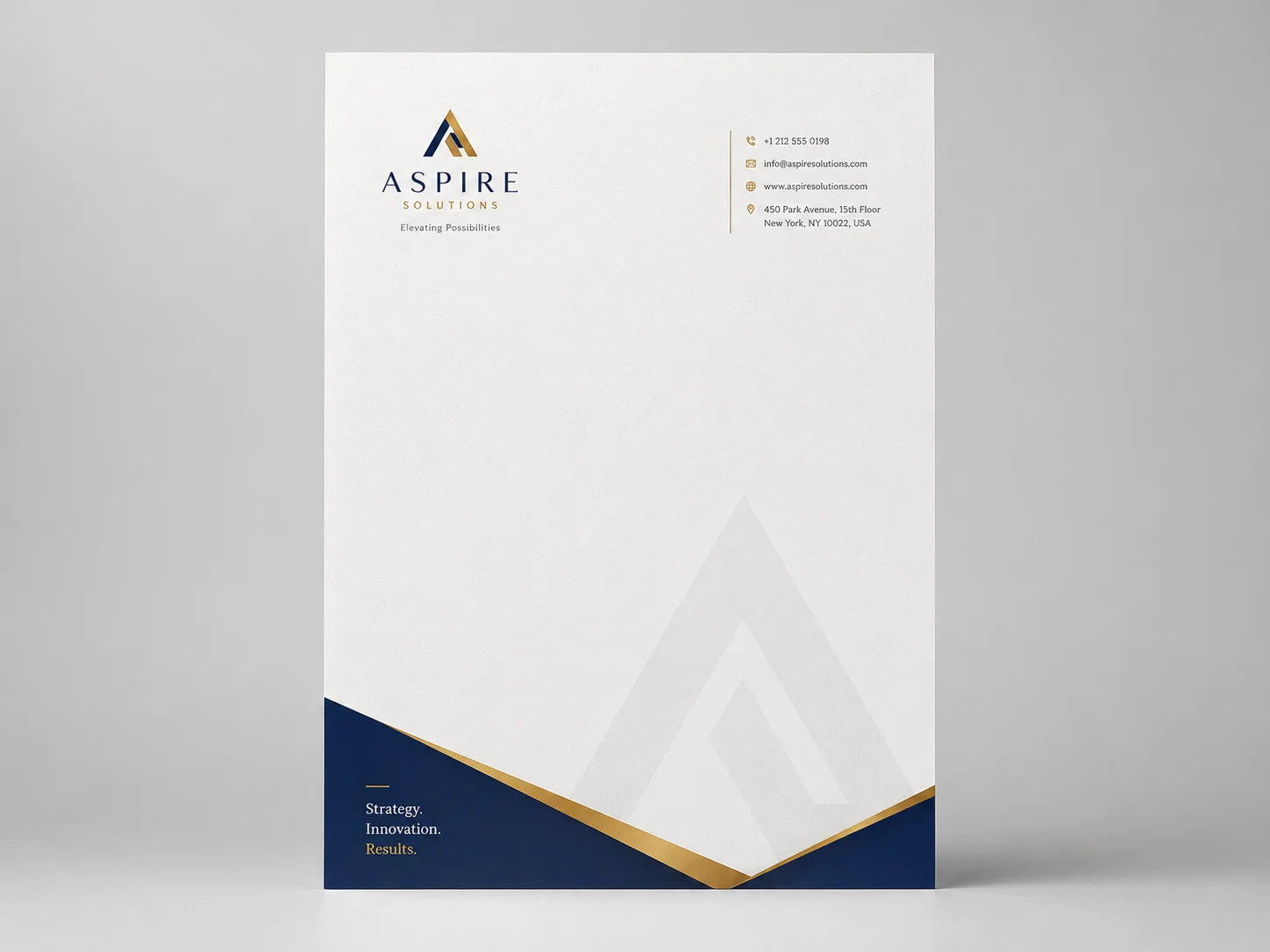
Quality letterhead can be identified by looking for certain characteristics, including thickness of paper; clarity of logo; and inclusion or exclusion of the company's contact information.
Business Letterhead Makes The First Impression Before Anyone Reads A Word
Will Rogers is often credited with saying, "You never get a second chance to make a first impression." Letterhead tests that line literally. The page arrives flat and folded in thirds, long before anyone has spoken to the sender, and a sheet of business letterhead is frequently all the reader has to go on.
A reader takes in four things almost at once. The logo, the paper, the margins, and the footer all get judged in a glance, and a company that passes earns the benefit of the doubt on everything else.
A stretched logo hurts. So does a footer packed with six phone numbers and no white space. Clean letterhead layout, crisp ink and colors that match the website pull the other way before anyone reads a line.
A Few Parts Of The Page Carry Most Of The Weight

Logo And Header Placement
The logo and business name sit at the top, usually left-aligned or centered. A letter on 8.5 by 11-inch paper folds in thirds to fit a #10 envelope, so the header works best inside the top third of the page, where the fold won't cut through it.
Some headers also carry a tagline, a slogan, and three accent colors on top of the logo, and the one job of saying who sent the page gets buried. Letterhead design services are usually called in to fix that kind of overcrowding, often after a print run has already gone out wrong.
Typeface Choices
Fonts are where a lot of letterhead typography goes wrong. One for the header and, at most, a second for the footer is plenty. Pages with three or four typefaces tend to look like a side project instead of a company.
A Complete, Usable Footer
A footer needs only a phone number, a mailing address, a website, and an email. Filled in, it looks confident. Accounts payable teams and lawyers check for those details first, so company letterhead that lists all four usually clears their desks without a follow-up call.
Paper, Ink, And Color Can Say As Much As The Logo

Paper Weight And Finish
If you hold a sheet of 20-pound copy paper, you will find it to be very light. If you purchase 24-pound or 32-pound copy paper, you will notice that it has more substance. This allows you to make envelopes that won't tear apart, and it also prevents your printing from bleeding onto the opposite side of the paper.
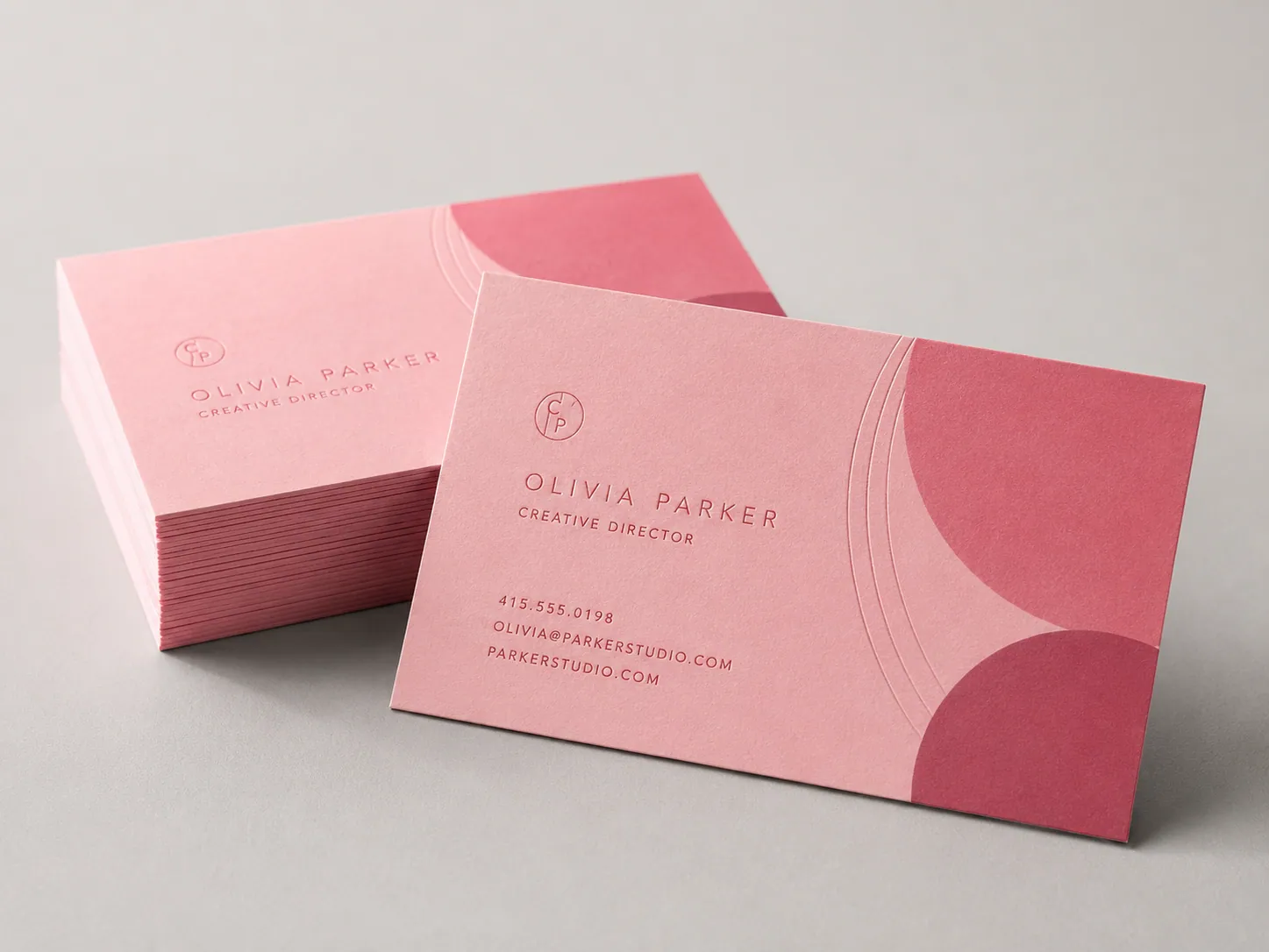
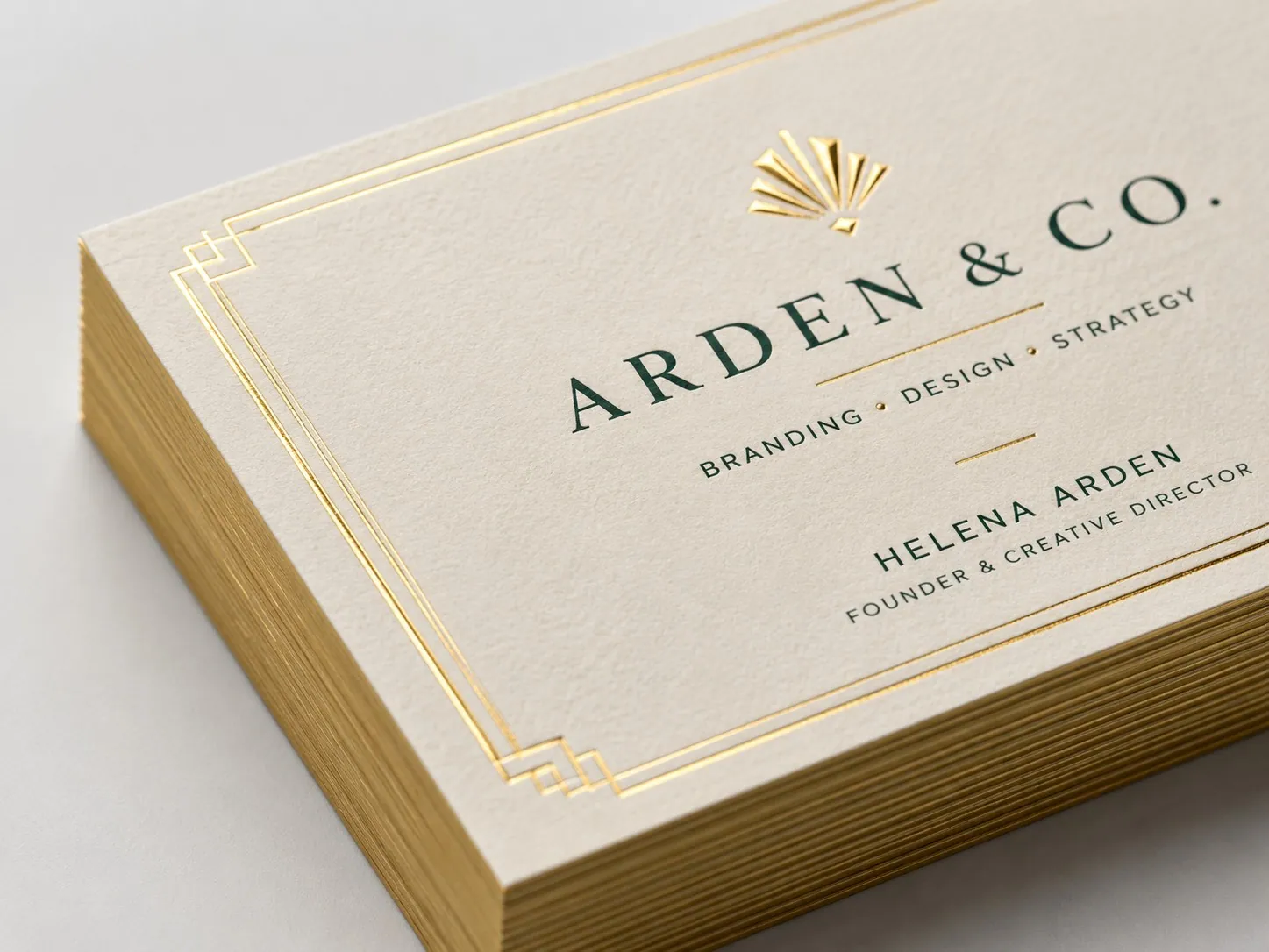
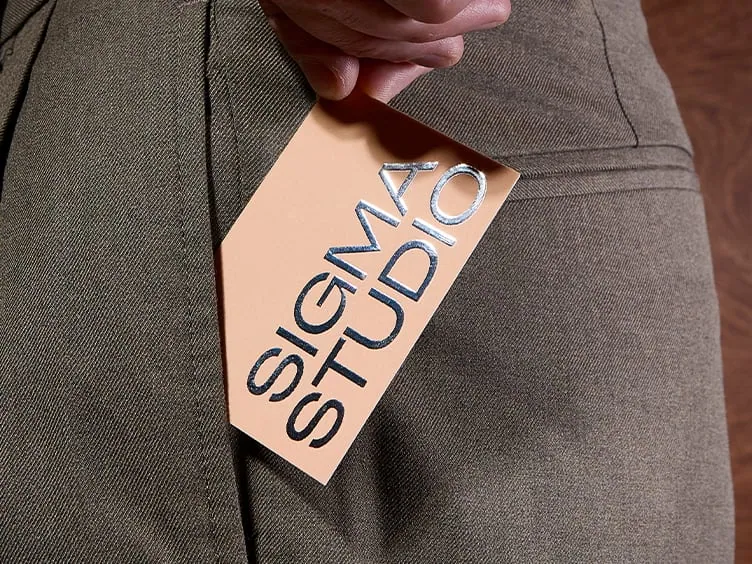
As with business cards, finish matters for letterhead stock; a mix of finishes in a stationery set creates an impression of accidental design.
Press Output Versus Inkjet
Run letterhead through an ordinary office inkjet and the flaws show up fast. Faint banding appears across solid areas, and a logo can drift a shade warmer by page twenty. For an internal memo, nobody cares. For a page headed into a client's file, somebody might.
A commercial digital press locks the color profile and the stock for the whole run. That consistency is what a letterhead printing service really sells, whether the order is 250 sheets of printed business letterhead or 2,000.
Matching Color On Screen And Paper
Most people can tell when your branding is inconsistent because of color. However, they will know it. If the color of blue used for your website is not the same as the color of blue that appears on your envelopes, you have created a perception of being two different businesses.
Give every printer you use a specific CMYK or Pantone value for each of your company's brand colors, and you will ensure that your business branding remains consistent throughout all of your marketing materials, whether online or offline.
Different Business Documents Call For Different Letterhead Formats

A contract and an invoice require very different things on a single sheet of paper. A contract needs to be restrained, use a minimum amount of color, and feature the type of lettering used on company letterhead so that nothing takes away from the wording of the contract.
Business document printing begins to matter just as much as the design of those documents when the volume of those documents being printed increases, because business document printing occurs far more frequently than letterhead printing.
Anyone weighing a numbered carbonless set against an ordinary printed invoice will find the trade-offs in this comparison of carbonless forms and printed invoices. It is a business document design question more than a printing one.
Ordering Custom Letterhead Printing In Three Decisions

Business letterhead printing comes down to three decisions, and quantity comes first. Somewhere between 250 and 500 sheets usually lasts a small office six months to a year, which keeps cash out of the drawer.
Weight comes second. Heavier stock costs more per sheet, so it should be settled before the quantity is. The envelope is the third decision, and it's the one people forget. A good letter inside a plain white envelope loses something on the way to the desk.
Matching business envelopes (in the standard #10 size) will have both the return address and logo, which will provide a visual connection between the mailing envelope and what is contained within. Additionally, using a single letterhead printing service for all of your letterhead, envelope, and re-order needs will help to reduce individual approval processes.
Letterhead Is Usually The First Piece Of A Set
Most often, corporate stationery does not consist of just one product. Generally, when ordering business letterhead printing, you are also likely to order other items such as business cards, envelopes, and folders.
All these products will be used by you to provide to your clients either during a meeting or after the sale has closed. If you have corporate stationery that contains matching presentation folders, then each printed sheet of paper you give to your client becomes a complete "leave-behind" package for him/her to take away from the meeting.
A custom printed letterhead tucked into one of those folders beside a card on the same stock reads as a single decision. Three separate orders placed months apart seldom do, even when the colors are close.
Conclusion
Every time you write a letter, there will be the exact same logos, colors, and layouts. No one will have to come up with new ideas every time they create a document. Readers will notice these elements immediately, even before they start reading the content of your letter.
Printing business documents can only be as good as the document that you print from. Therefore, you should check to see if your logo is a size that works well with your layout, what type of paper you want to use (weight), if the colors are correct, and if your phone number is listed at the bottom of the page.
BizCard uses commercial-grade paper to produce its letterhead. You can request a free sample pack to compare the different types of paper weights before ordering a large quantity.


